.png?width=375&height=100&name=WebPage%20logo%20with%20curves%202026%20(8).png)
It fascinates me to think about how different living things experience the world. Flies process images much faster than we do, making even the fastest fly swatter look like it’s moving in slow motion. Elephants can detect vibrations traveling through the ground using sensitive pads in their feet. And bats emit high-frequency sounds to locate insect prey in complete darkness using echolocation.
Scientists have recently discovered another surprising animal sense. An everyday forest animal may be leaving light-based clues that other members of its species can see, but humans cannot.
These glowing signals mark territory and share information with potential mates. They are scattered throughout forests and fields, and they’re literally right beneath our noses… we just can’t see them! 👀
So who is this secret communicator?
Deer! 🦌 More specifically, the white-tailed deer found throughout places like Georgia.
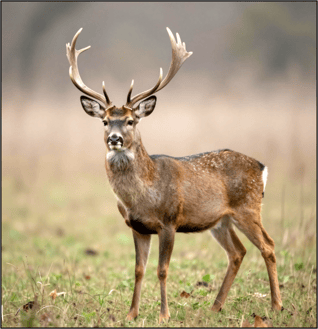 As many pet owners know, animals often mark territory with scent. Deer do something similar. During the fall breeding season, male deer scrape the forest floor with their hooves and then urinate in that spot. These “scrapes” act like message boards, letting females know a male is nearby and warning rival males to stay away.
Sounds like normal animal behavior so far, right?
But something strange happened when scientists shined ultraviolet (UV) flashlights on these scrapes. The urine markings glowed brightly under UV light. 🔦 This glow happens because certain chemicals in urine fluoresce, meaning they reflect visible light when UV light hits them. Humans can’t see ultraviolet light very well, but deer eyes work differently.
Unlike human eyes, deer eyes do not strongly filter out ultraviolet light. This means deer may be able to see UV reflections that are completely invisible to us, especially during dawn and dusk when UV light is more common.
That means a deer walking through the forest might notice glowing patches where other deer have left scent markings. Although it wouldn’t quite look like Times Square lighting up the woods, it might make these messages much easier for other deer to detect.
Deer may leave other UV clues behind too. When males rub their antlers against trees during the rut, they scrape away sections of bark. This exposes inner plant material that contains compounds, such as lignin and other plant chemicals, that can fluoresce under UV light.
In other words, a rubbed tree trunk might act like a visual signpost that deer can detect more easily than we can.
How does this trait help deer survive? Forests are large areas, sometimes with thick undergrowth. Anything that helps deer locate each other and communicate, especially in the low-light times of day when deer are most active, could improve the population survival. 🤔
How does the vision of deer compare with other organisms? Here is a graph that shows the spectrum of light, from ultra-violet, through visible light, and up to infrared, that certain species can see:
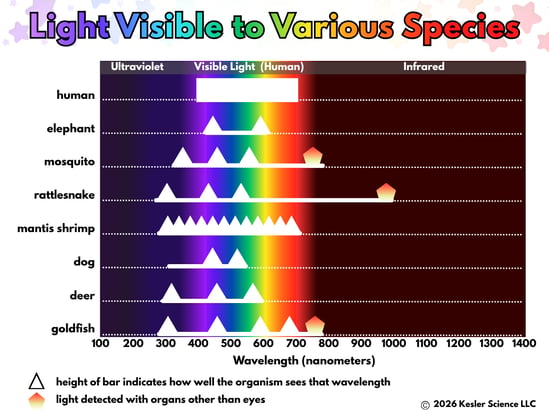
Here are some questions I'd have looking at this graph:
💡How does the range of visible light for deer compare to humans?
💡Which animals can detect light with wavelengths less than 400 nm (ultraviolet)? Which animals can detect light with wavelengths greater than 780 nm (infrared)?
💡Some creatures have a wide range of visible light, but they only see certain colors well. Dogs, for example only see two colors well. What other animals have certain colors that are stronger than others? Choose another animal with limited color range and describe their vision.